
Refrigeration Cycle: Two-Stage Compression
Unfortunately, the compression process imparts heat into the refrigerant being compressed. This heat is called the “heat of compression” and is directly related to the compression ratio. A decrease in suction pressure or an increase in discharge pressure will result in a higher theoretical discharge temperature. High discharge temperatures increase friction and cause lubricating oils to break down which results in wear and tear on the compressor. As a result, refrigeration systems with very low evaporator temperatures cannot operate efficiently using a single stage of compression.
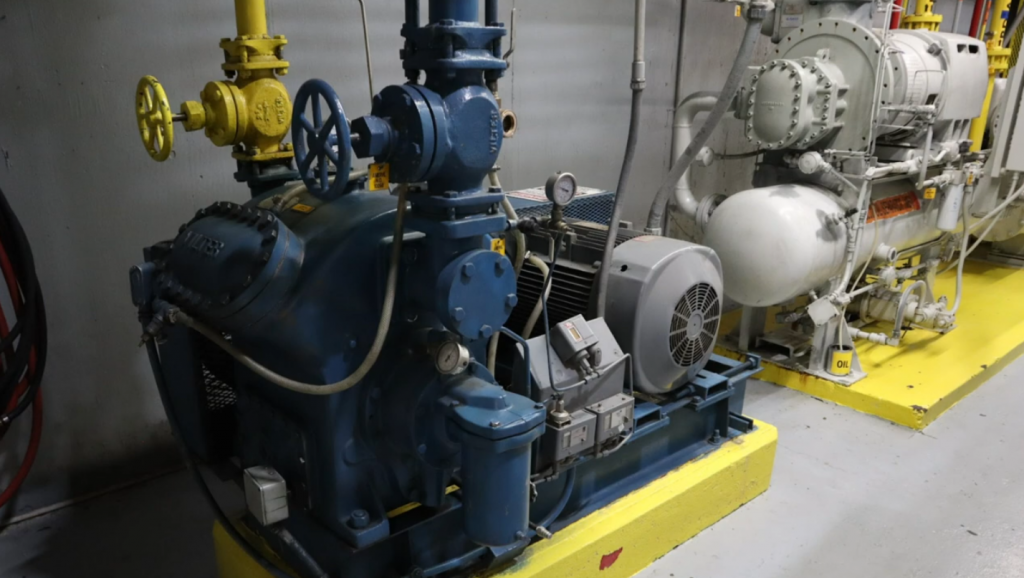
Engineers address this by employing a two-stage system in which compression is divided between two different compressors that are in series with each other. The first stage compressor is called the “booster compressor”. Vapor from the evaporator is drawn into the booster compressor where it is compressed to an intermediate pressure between the evaporator and condensing pressure.
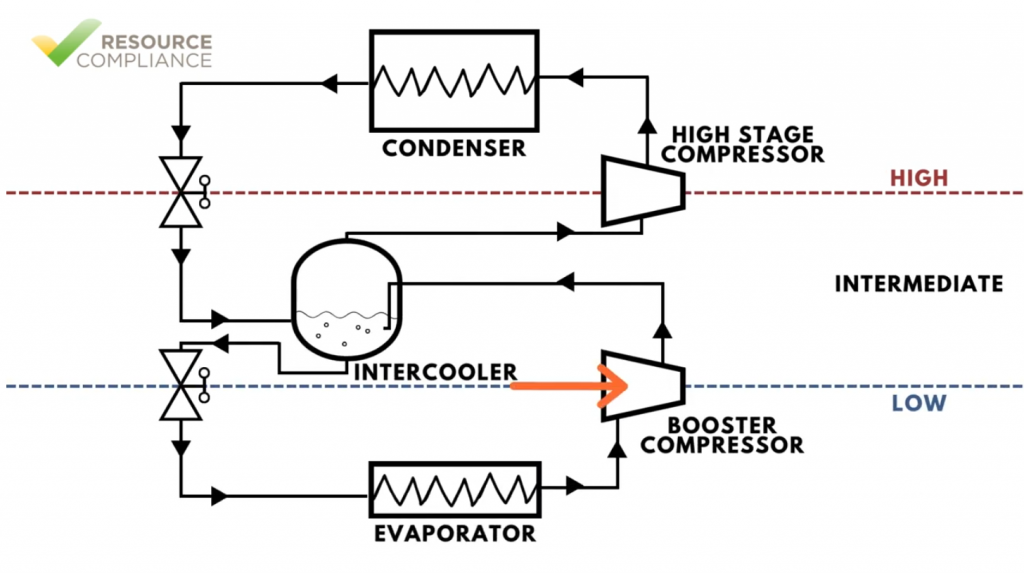
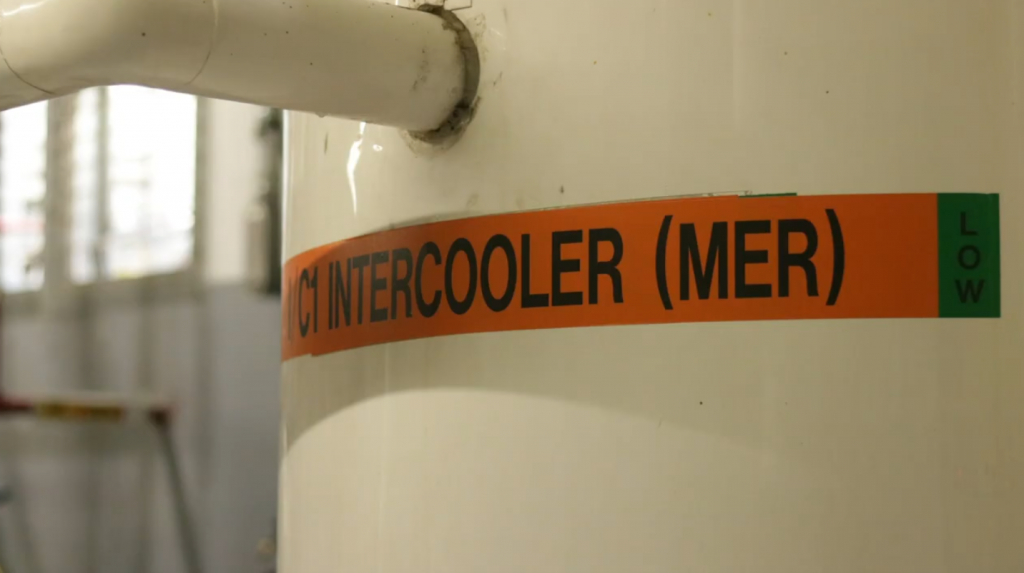
Vapor exiting the booster compressor is piped to a vessel called an “intercooler”. The intercooler maintains a level of intermediate pressure liquid that the booster discharge gas percolates through. This desuperheats the booster discharge gas so that the vapor exiting the top of the intercooler, while at the same pressure, is at a much lower temperature.
That vapor is supplied to the inlet of the second-stage compressor, which is typically called the “high-stage compressor”. Removing the superheat from the vapor supplied to the high-stage compressor results in a discharge temperature at the high-stage compressor that will not break down lubricating oil or damage the compressor.
Leave a Reply