
Refrigeration Cycle: Screw Compressors
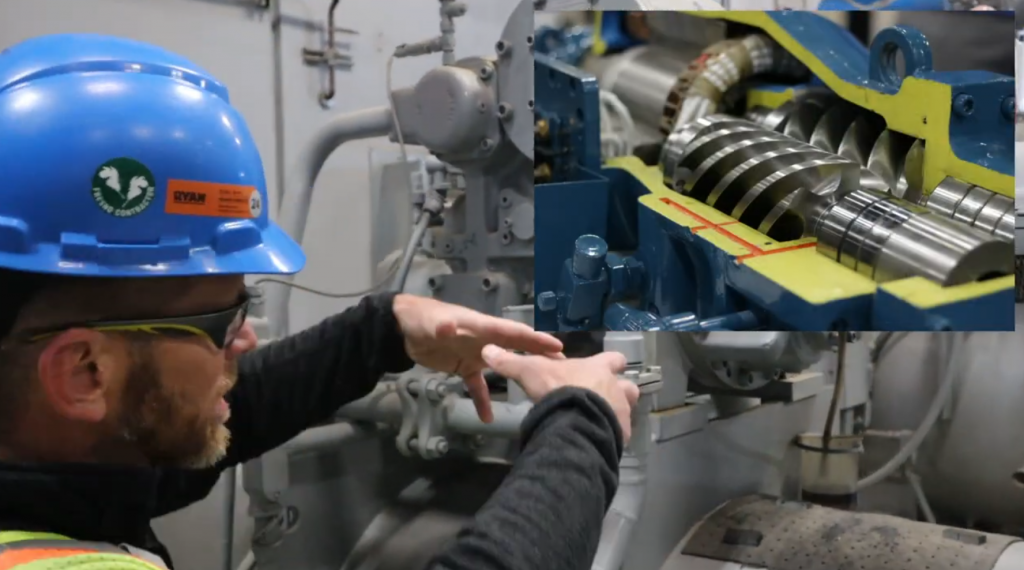
The most common type of screw compressor is the ‘rotary screw compressor’. This type of compressor utilizes two rotors which are often called helical screws. One screw is designated the “male” screw and the other is a “female” screw. Vapor is drawn into the screw and captured in the space between the screws. The screws are precisely machined so that as the screws rotate, the volume available for the vapor shrinks, which causes the pressure to increase.
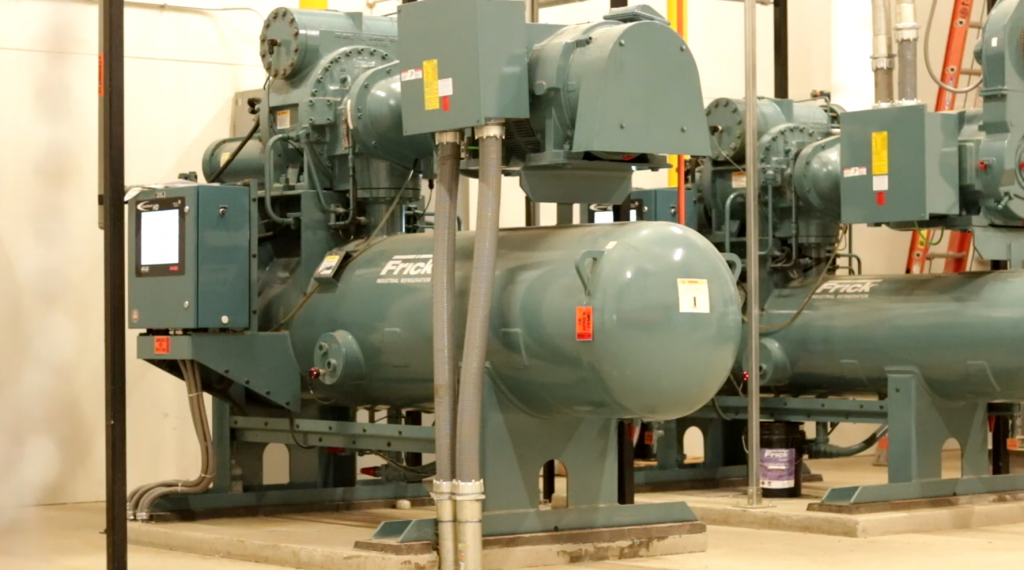
Screw compressors require oil injection in the compression chamber to provide sealing so that vapor cannot leak backward through the screws. Rotary screw compressors provide several advantages over their reciprocating counterparts. First, they require significantly less maintenance than reciprocating compressors. Second, screw compressors typically operate at 3,600 RPM compared to 1,800 RPM maximum for recips. The increased rotational speed results in higher CFM. In other words, screw compressors can provide higher refrigeration capacity for the same equipment physical size. Third, screw compressors can handle compression ratios as high as 20:1 which means they are more versatile and can be used as a single-stage machine whereas reciprocating compressors would require a two-stage configuration for the same application.
Because compression is accomplished by trapping a volume of vapor between the screws and forcing the vapor to the outlet, it is possible that the change in vapor volume could exceed what is required. This is called ‘overcompression’. Overcompression is inefficient, so screw compressor manufacturers have learned to address this issue by designing the screws and outlet port for the exact design conditions. Most modern screw compressors also offer some form of variable volume ratio, which is often called ‘Variable Vi’. Variable Vi compressors have a slide valve/slide stop that moves to change the volume ratio to a precise value matching the system discharge pressure.
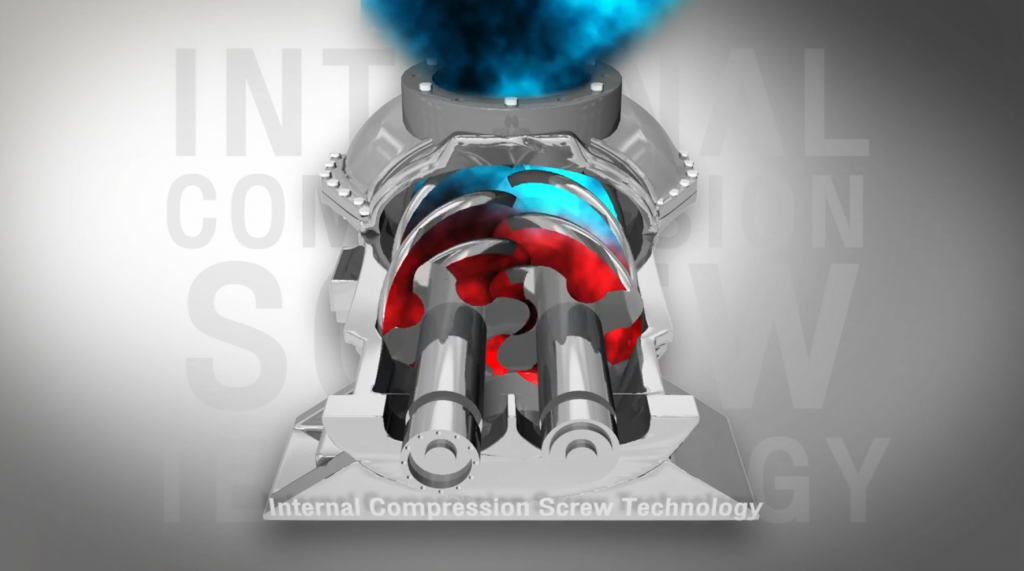
As its name suggests, a ‘single screw compressor’ differs from a rotary screw compressor in that it has a single rotor which is configured with a ‘gate rotor’ on each side. As the screw spins, the volume of the trapped area decreases, which causes the pressure to increase. High pressure vapor exits the single screw at two points that join together before the vapor enters the oil separator.
Leave a Reply