
History of Refrigerants
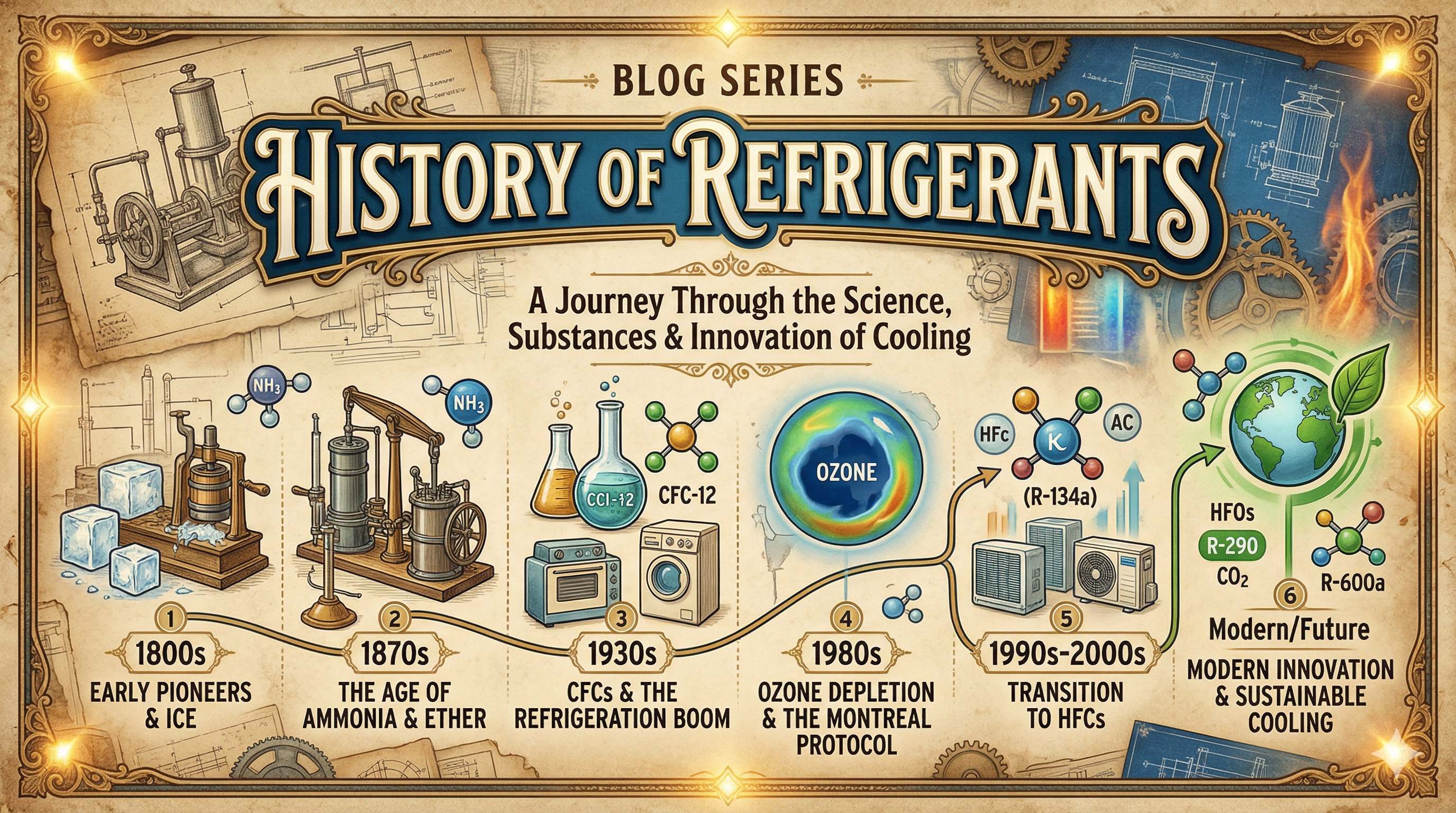
When the refrigeration cycle was first developed, natural compounds were the only available refrigerants. Ammonia, carbon dioxide, and even sulfur dioxide were readily available and had useful thermodynamic properties. These refrigerants were great choices because they were easy to manufacture, readily available, and inexpensive to purchase.
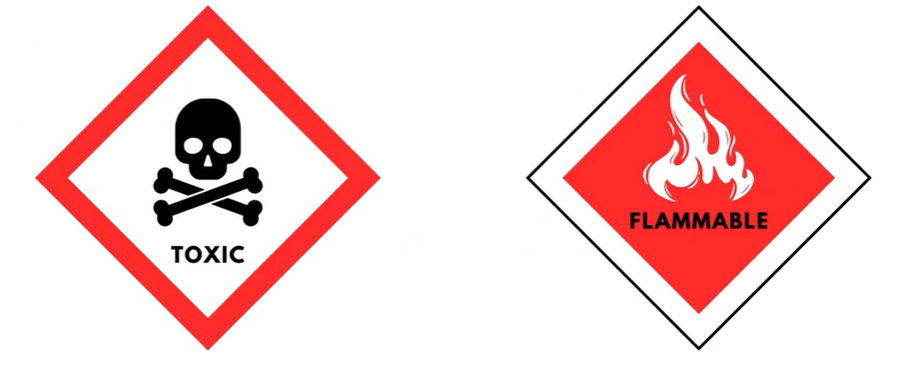
Unfortunately, due to the toxicity and flammability of these early refrigerants, the industry turned its focus to developing less hazardous synthetic alternatives. Dichlorodifluoromethane, better known as R-12, was the first widely used synthetic refrigerant. It was developed by a team of scientists working for the Frigidaire division of General Motors in the late 1920s. This new refrigerant was named “Freon,” which is a term that has evolved into a descriptor for most synthetic halocarbons.
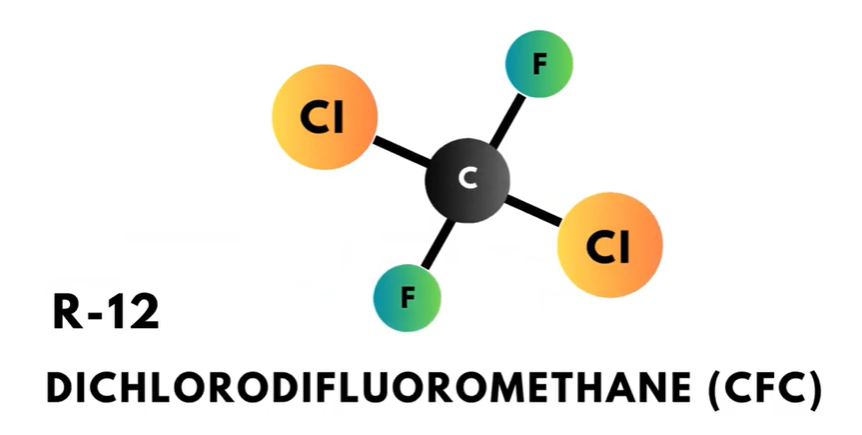
R-12 is one of the many refrigerants that are part of the chlorofluorocarbon, or CFC, family. All CFC compounds have chlorine in their molecular structure. Studies in the 1970s revealed that CFCs released into the atmosphere would collect in the stratosphere, and the chlorine molecules reacted with the ozone layer, causing it to be depleted. The ozone layer protects the Earth from the sun’s harmful UV radiation.

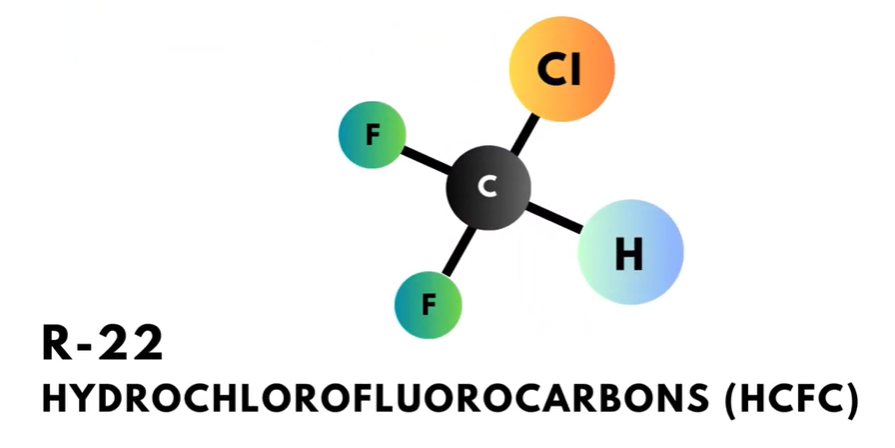
Hydrochlorofluorocarbons, or HCFCs, are a different category of synthetic compounds that also have chlorine in their chemical structure. R-22 is one of the most well-known HCFCs. HCFCs differ from CFCs in that the carbon is also bonded to a hydrogen molecule. This makes the compound less stable, with a shorter atmospheric lifetime and a lesser threat to the ozone layer. Unfortunately, while this addressed the ozone depletion concern, HCFCs are considered greenhouse gases with high global warming potential, which has resulted in many legislative efforts that prohibit their use.
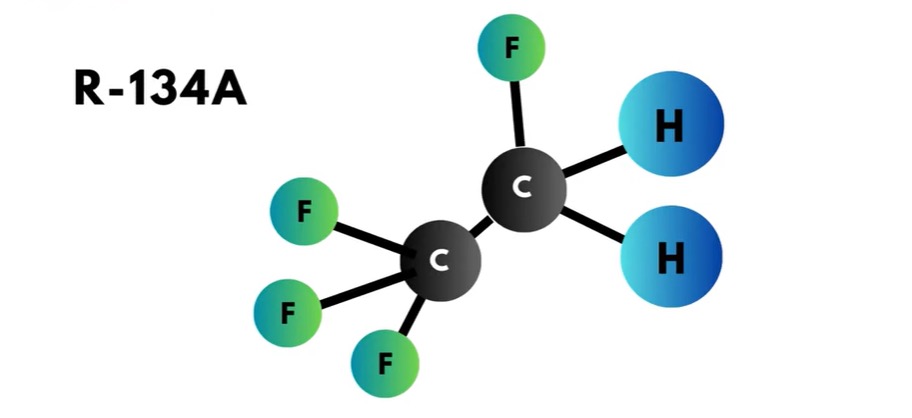
Hydrofluorocarbons, or HFCs, have no chlorine in their chemical formula, so they are not considered a threat to the ozone layer either. In general, HFCs have lower global warming potential than HCFCs, so for many years, they were the synthetic refrigerant family of choice. However, the global warming potential in most HFCs is still unacceptably high for many countries, so numerous government restrictions are in place on their use. One of the most common HFCs is R-134A, which is used in many air-conditioning systems. Notice that this chemical compound has no chlorine atom, which is imperative for HFCs.
As scientists continue to search for refrigerants that are non-toxic, non-flammable, environmentally friendly, and have excellent thermodynamic properties, many refrigerant mixtures have entered the market. Two categories of refrigerant mixtures are named “zeotropes” and “azeotropes”.
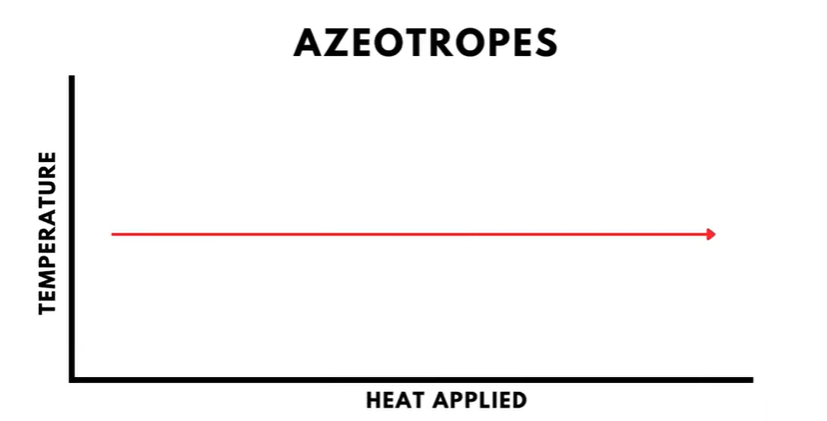
Azeotropes are refrigerant mixtures that boil at a constant temperature. In other words, they behave similarly to a single compound refrigerant, even though they are a mixture of more than one refrigerant.
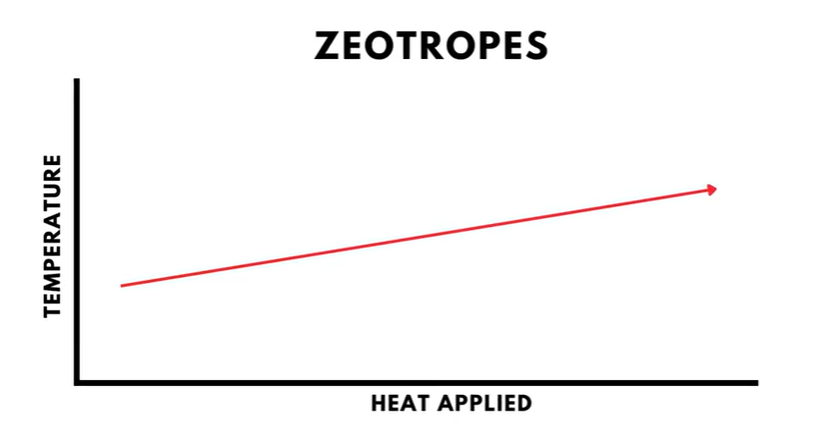
Zeotropes are also refrigerant mixtures, but the individual component molecules tend to separate during boiling and condensing. Because of this, zeotropes are said to have a temperature “glide” during a change of state. In other words, they do not boil and condense at a constant temperature. This can become problematic when there is a leak because the mixture components may not leak at a proportional rate, thus affecting the refrigerant properties. This makes recharging zeotropic systems very challenging. Often, the entire system must be evacuated and recharged to ensure the blend is correct.
While it is acknowledged that natural refrigerants originally fell out of favor due to their hazardous properties, they have always been utilized in industrial applications. In recent years, they have regained popularity as environmental concerns have become a more dominant refrigeration selection criterion.
Hydrocarbon refrigerants such as butane and isobutane are now also being utilized in household refrigerators. Ammonia is still widely used in industrial applications and is gaining popularity in smaller commercial applications.
Leave a Reply