
Refrigeration Cycle: Air-Cooled Condensers
An air-cooled condenser is a type of heat exchanger used in refrigeration systems to reject heat from the refrigerant into the ambient air without the assistance of water. It accomplishes this by circuiting the hot, high-pressure refrigerant from the compressor through a coil system, where heat is dissipated to the surrounding air with the aid of fans. Air-cooled condensers are extensively used in residential and commercial refrigeration and air-conditioning systems because they offer a simple and efficient solution for heat rejection without the need for water or additional cooling mediums.
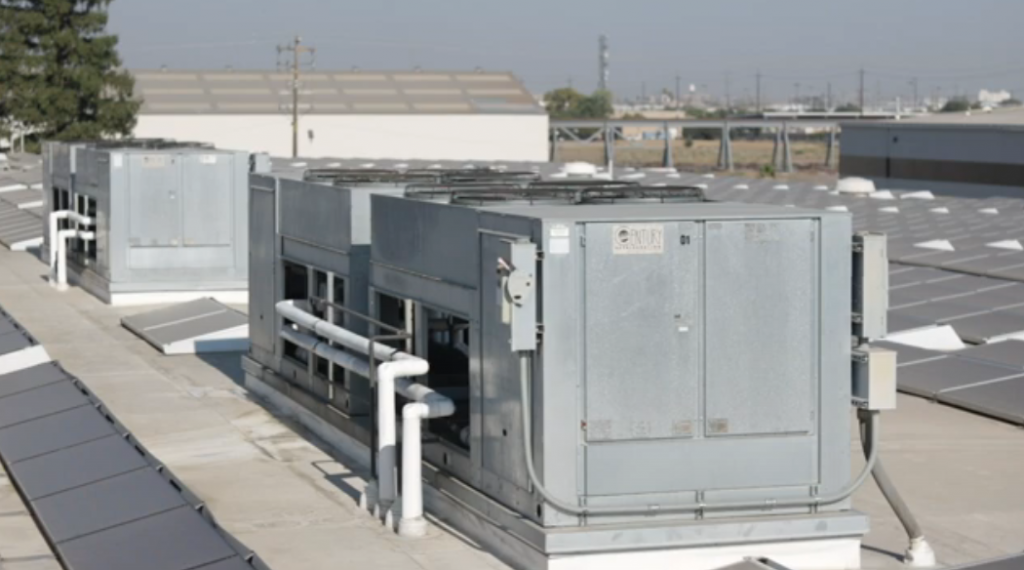
The second law of thermodynamics teaches us that heat only flows from a higher temperature to a lower temperature. Therefore, in order to use an air-cooled condenser, the refrigerant condensing temperature must exceed the ambient dry bulb temperature.
The primary components in an air-cooled condenser are:
Connections
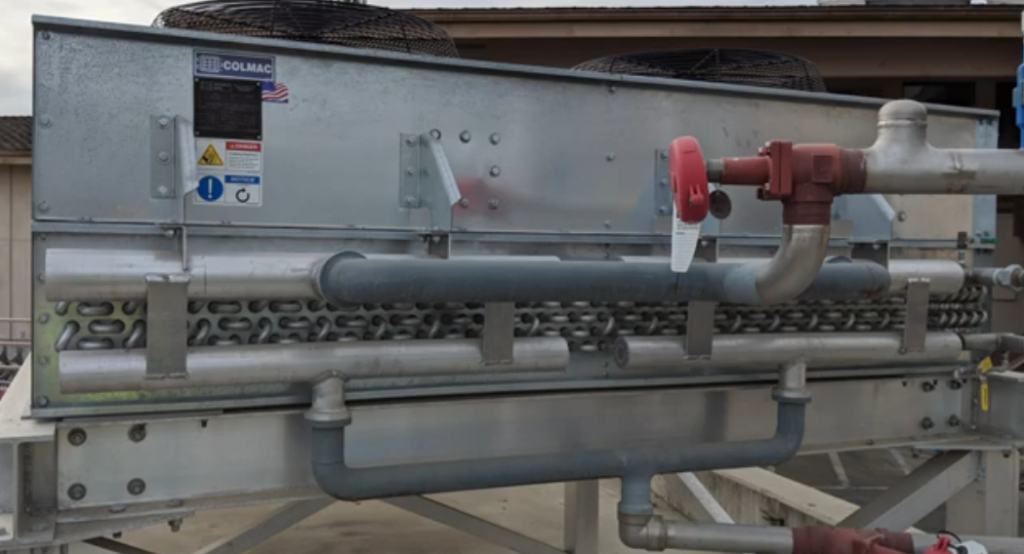
Each condenser will have a least one inlet connection to receive superheated vapor and one outlet connection where liquid exits the condenser.
Coil and Fins
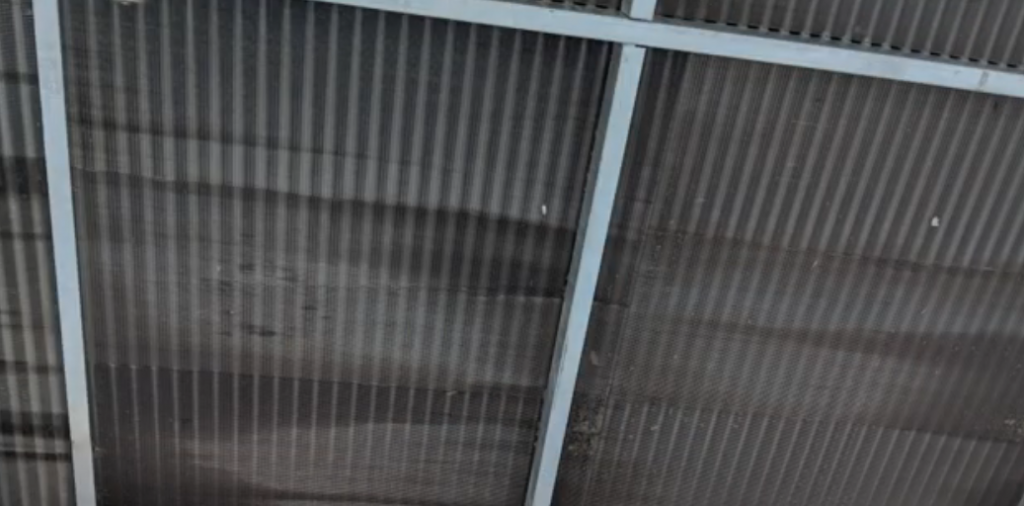
The refrigerant flows through a series of heat exchange coils made of copper in halocarbon systems or various steels for ammonia systems. Thin metal fins are attached to the coils to maximize the surface area in contact with the air, enhancing the heat transfer process. These coils and fins provide the necessary surface area for effective heat transfer.
Fans
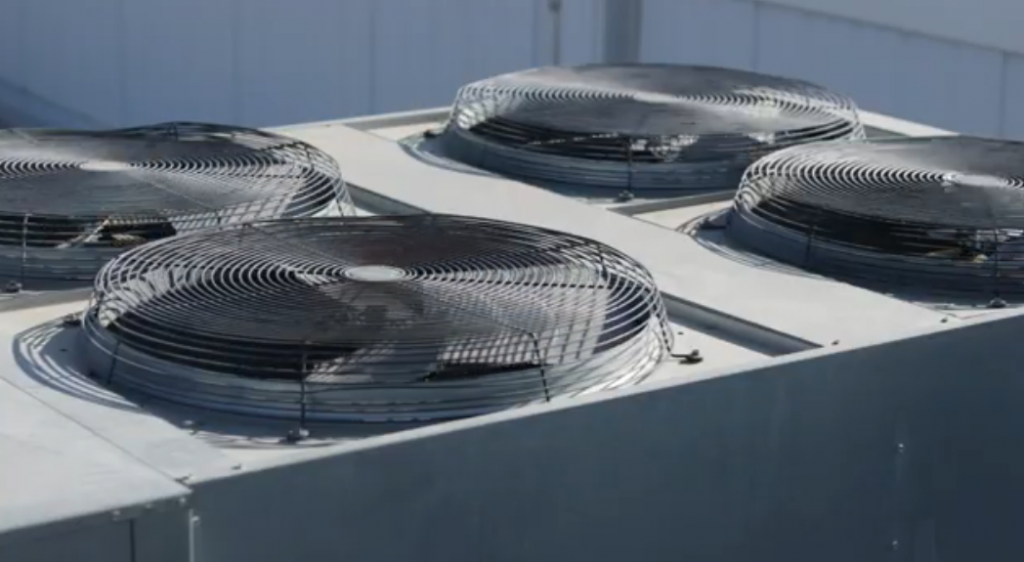
Fans move ambient air across the coils, facilitating heat dissipation from the refrigerant.
Housing
The condenser is encased in a protective housing that supports the coil and fan assembly, often designed to optimize airflow and protect the components from environmental elements.
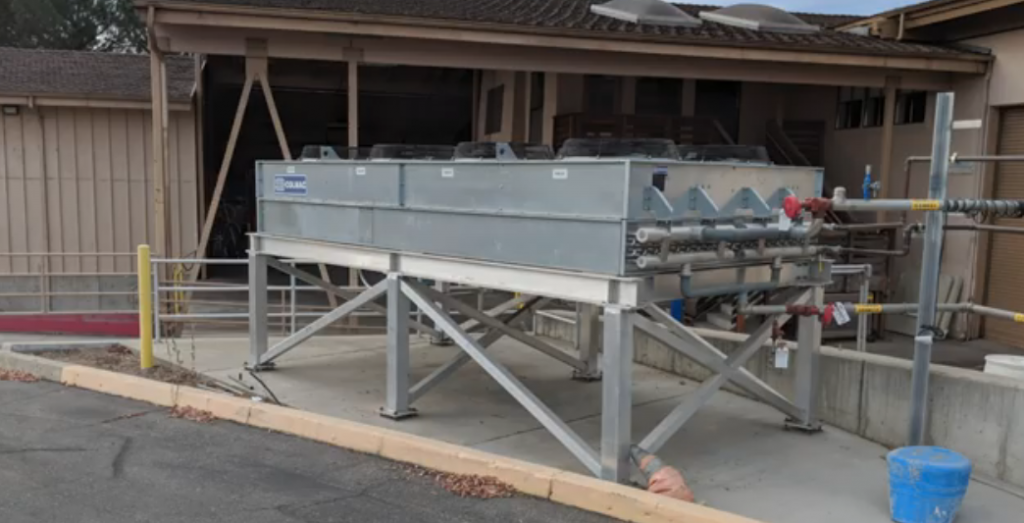
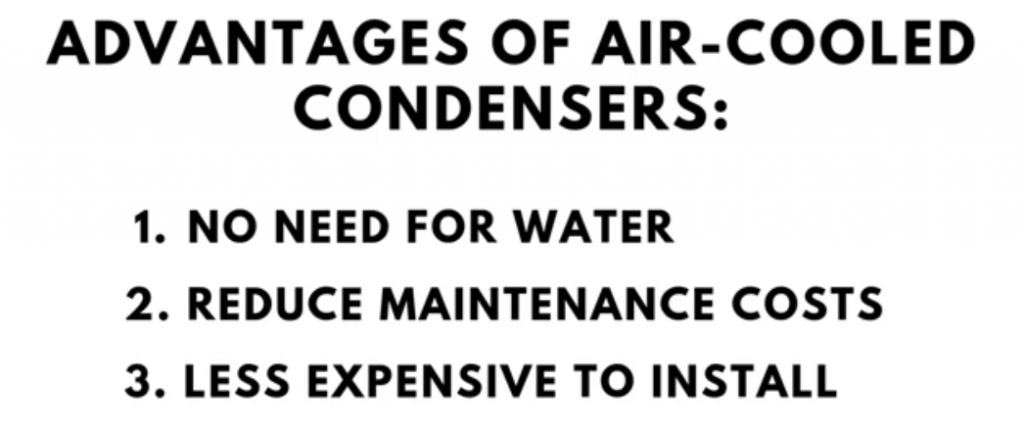
To summarize, air-cooled condensers provide a reliable and cost-effective solution for heat rejection in refrigeration systems. Their water-free operation, low maintenance requirements, and versatility make them a popular choice across residential, commercial, and light industrial applications. However, water and evaporatively cooled systems offer higher efficiencies and are more widely used in large industrial systems, especially when ammonia is the refrigerant.
Leave a Reply