
Refrigeration Cycle: Compression Ratio
“Compression ratio”, which is the ratio of the absolute discharge pressure to the absolute suction pressure, is an important concept for a refrigeration professional.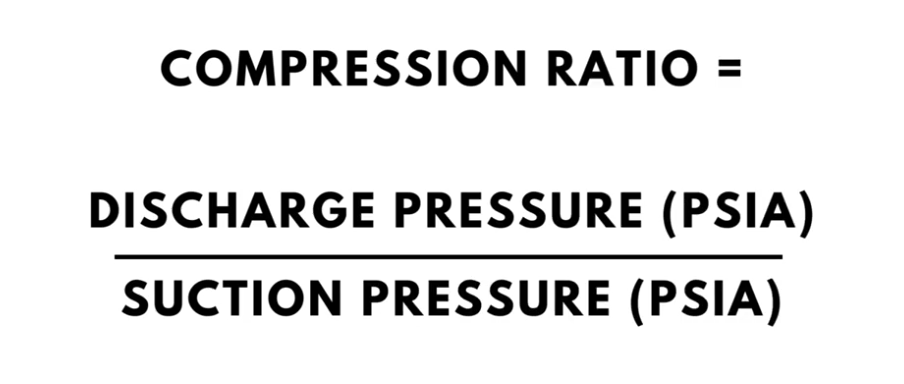
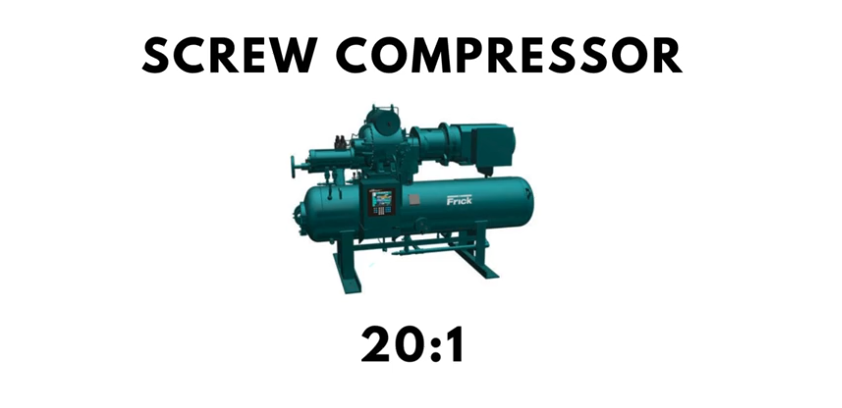
Compressors are limited in the pressure differential that they can impose on a vapor. Screw compressors have the highest potential and can achieve compression ratios as high as twenty to one.
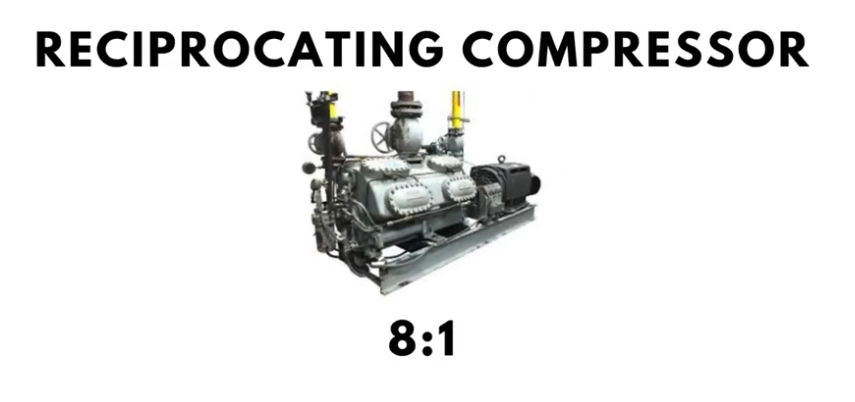
 Reciprocating compressors are typically limited to eight to one.
 Rotary vane compressors have the lowest compression ratio and are limited to four to one.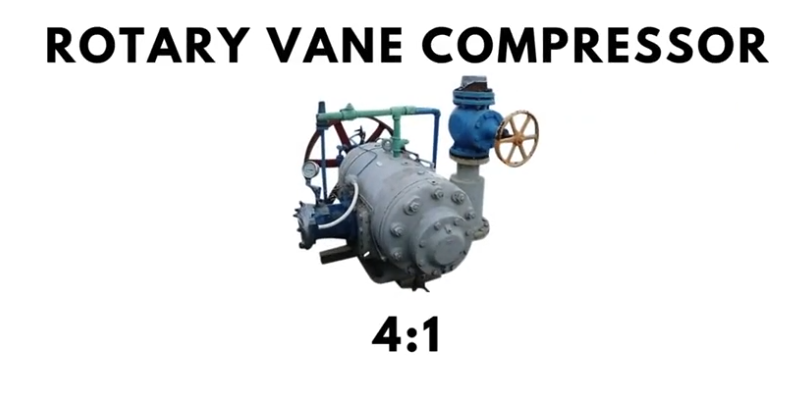
Calculating the compression ratio is fairly straightforward. The most common mistake made is to use gauge pressure instead of absolute pressure, which results in an incorrect answer.
Example:
What is the compression ratio on a compressor that has a 20 psig suction pressure and 150 psig discharge pressure?
The first step is to convert both of the pressures into the absolute scale. This is done by adding 14.7 psi to the given gauge pressures, which results in a 34.7 psia suction pressure and 164.7 psia discharge pressure. Now calculate the compression ratio by dividing 164.7 by 34.7. The compression ratio is 4.75. Notice that the units ‘psia’ in the numerator cancel with the ‘psia’ in the denominator, so the final answer is unitless.
Calculating the compression ratio without first converting to absolute pressure would have divided 150 psig by 20 psig and arrived at a compression ratio of 7.5, which is incorrect.
Leave a Reply