
Properties of Refrigerants: Ammonia (R-717)
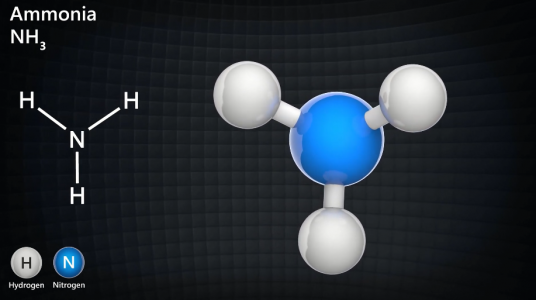
Ammonia is a phenomenal chemical. It has a wide variety of uses in many different industries. Ammonia has been used in the following applications: Fertilizer, Water Treatment, Cleaning, Selective Catalytic Reduction, and Refrigeration.
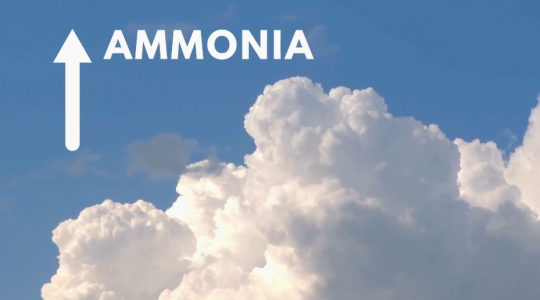
Ammonia boils at -28.1ºF at normal atmospheric pressure. Ammonia vapor is lighter than air as expressed by a vapor density of 0.6.
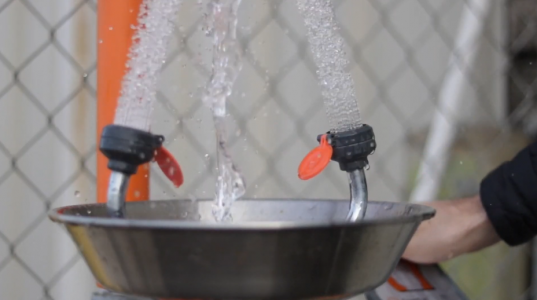
Ammonia is highly soluble, which means it readily absorbs into water. This explains why eyewash and safety showers are essential for decontamination after exposure occurs.
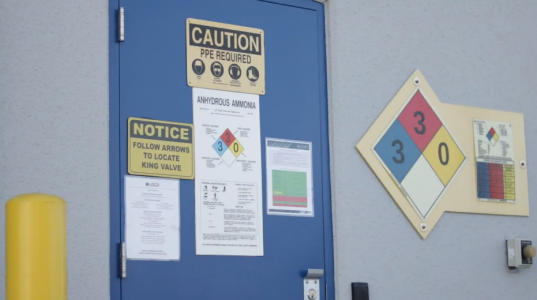
While flammability is generally not the primary concern, it is important to know that ammonia vapor may burn in air concentrations between 15-28%. The NFPA 704 flammability designation for ammonia is ‘1’ when stored outdoors which indicates that ammonia will not readily burn. However, when ammonia is used indoors the designation is ‘3’ which communicates the real risk of fire.
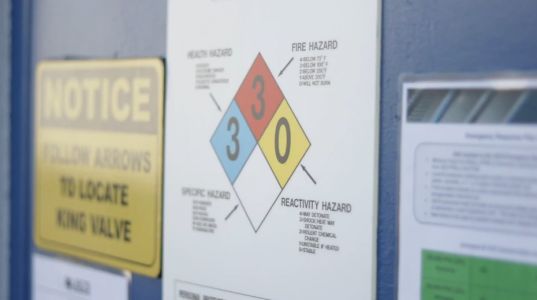
Ammonia is considered a significant health hazard. If inhaled, it is pungent and can be suffocating. However, because of ammonia’s low odor threshold and pungent odor, people generally seek relief from its effects at relatively low concentrations.
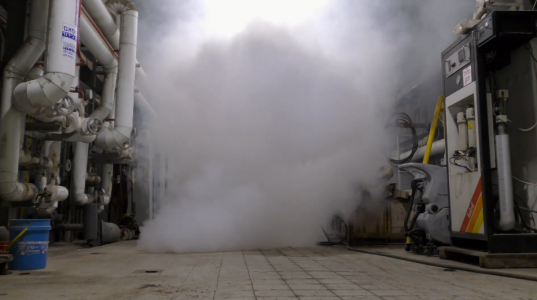
Permissible exposure limit, or PEL, is the legal limit of exposure of an employee to a chemical substance without respiratory protection. Ammonia’s self-alarming odor makes it easy to detect a leak. Most people notice ammonia between 1-5 ppm, which is well below the permissible threshold. For ammonia, OSHA has mandated the PEL as 50 parts per million, but some states such as California and Oregon have lowered the threshold to 25 ppm. IDLH is an acronym that stands for “immediately dangerous to life and health”. Ammonia’s IDLH is 300 ppm. Ammonia is not a “reactive” chemical as indicated by its instability rating of zero in the yellow quadrant of the NFPA 704 system. However, ammonia does react with many substances. Most notably, ammonia is incompatible with copper, zinc, and any of their alloys.
Ammonia is a natural refrigerant and is considered “environmentally friendly” because it has no ozone depletion potential or global warming potential. For this reason, ammonia’s reach has grown as businesses aim to meet environmental goals. Ammonia is, however, a highly regulated chemical.
Leave a Reply